


Neck Pain and Hip Mobility: Could Stiff Hips Be Making Your Shoulders Round and Your Neck Hurt?

Most people think neck pain starts in the neck. They blame the pillow, the desk setup, stress, or weak upper back muscles. In many cases, those factors do matter. But sometimes the neck is not the true starting point of the problem. Sometimes it is simply the area paying the price for a compensation pattern that began much lower in the body.
One of the most overlooked contributors is poor hip mobility.
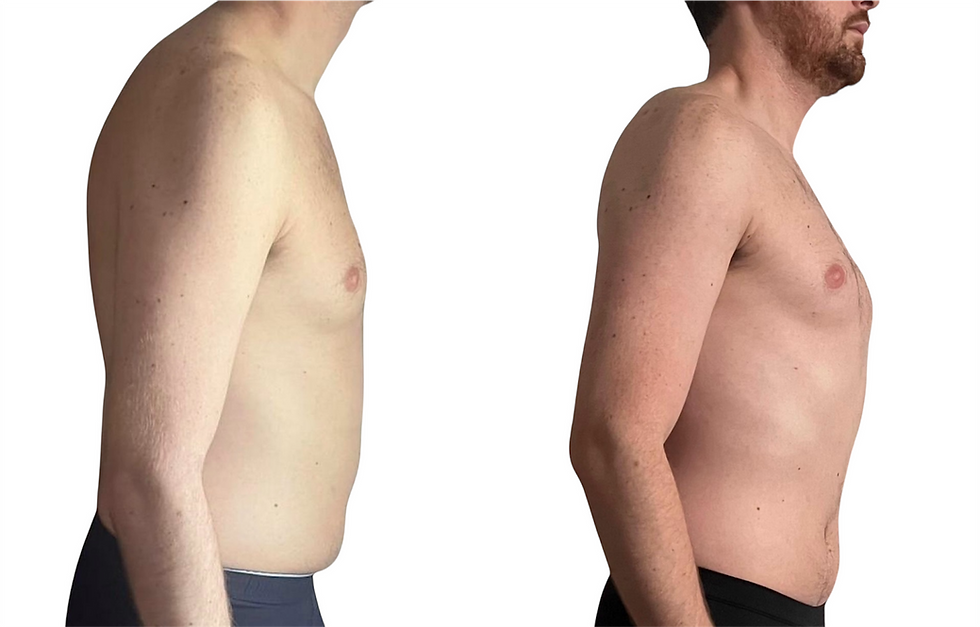
That may sound surprising at first, but from a biomechanical point of view it makes sense. The body does not move as isolated parts. It works as an integrated chain. When the hips lose mobility, especially in extension, rotation, or flexion, the body still has to find movement somewhere else. Very often, it borrows that movement from the lumbar spine, thoracic spine, ribcage, and shoulder girdle. Over time, this can create a posture pattern that looks very familiar: rounded shoulders, a stiff upper back, forward head posture, and chronic tension in the neck. Research consistently shows that forward head posture, rounded shoulders, and increased thoracic kyphosis are linked and often appear together rather than in isolation.

Why neck pain is often a compensation problem
Neck pain is frequently treated where it is felt. People stretch the upper traps, massage the neck, strengthen the rhomboids, or try to force the shoulders backward. Sometimes that gives temporary relief. The reason it often does not last is that symptoms are being treated locally while the movement problem remains global.
If the hips are not moving well, the pelvis often changes position and the lumbar spine starts compensating. Once that happens, the thoracic spine tends to lose ideal mechanics. In some people it becomes stiffer; in others it becomes more kyphotic and rounded. Once the thoracic spine and ribcage stop moving efficiently, the scapulae lose their ideal resting position and movement pattern. At that point, the neck has to work harder to stabilize the head and maintain visual orientation. This is one reason people feel constant tightness around the neck and shoulders even when imaging is normal and even when local treatments have already been tried. A systematic review on mechanical neck pain found that thoracic posture and mobility are meaningfully associated with neck pain presentations, which supports assessing the trunk rather than looking only at the cervical area.
How poor hip mobility can contribute to rounded shoulders
Rounded shoulders are often treated like a simple upper-body issue. The usual explanation is “tight chest, weak upper back.” That is not completely wrong, but it is incomplete. The position of the shoulders is heavily influenced by what is happening below them, especially through the pelvis, thoracic spine, and ribcage.
Recent research suggests that pelvic and spinal posture affect scapular position and shoulder mechanics, and a 2025 study found that pelvic position can influence shoulder range of motion. That does not mean every person with rounded shoulders has stiff hips, but it does support the idea that the shoulder complex is not independent from the lower chain. When the pelvis is pulled into a poor position and the trunk reorganizes around that, the shoulders often drift forward as part of the adaptation. The posture you see at the shoulders may be the end result of a compensation that began much lower.
This is why some people keep stretching their chest and strengthening their upper back, yet their shoulders still return to the same rounded position. They are trying to correct the end point of the chain without changing the mechanics feeding it.
The thoracic spine is often the middle link
If hip mobility is the lower contributor and neck pain is the upper symptom, the thoracic spine is usually the middle link that connects the two.
This is where many posture problems become more understandable. When hip motion is limited, the thoracic spine often has to compensate during reaching, sitting, walking, bending, or training. Over time, this can change thoracic posture, reduce rotation or extension, and alter scapular mechanics. Once the shoulder blades stop sitting and moving well on the ribcage, the neck muscles often become overactive in an attempt to stabilize the upper quarter.
This matters because the research is not just theoretical. Evidence shows that therapeutic exercise can improve forward head posture, rounded shoulders, and thoracic kyphosis, and studies have also shown that improving thoracic mechanics can help with neck pain and function. In other words, once the trunk moves better, the neck often no longer has to absorb so much load.
Why stretching the neck alone often fails
A common mistake is assuming that every tight muscle needs more stretching. In reality, muscles often feel tight because they are overworking, not because they are simply short.
The neck is a perfect example. If the thoracic spine is stiff, the shoulders are protracted, and the ribcage is poorly positioned, the cervical musculature may stay active all day trying to maintain control. In that situation, stretching the neck may reduce sensation temporarily, but it does not solve the reason the neck is overloaded.
This is why generic mobility routines often fail. They give everyone the same exercises without identifying which segment is actually driving the compensation. One person may need more hip internal rotation. Another may need better hip extension. Another may have enough mobility but poor pelvic control. Another may have thoracic stiffness as the primary issue. Another may breathe in a way that keeps the upper chest dominant and the neck constantly recruited. Without assessment, all of them end up doing the same “posture correction” drills and wondering why nothing really changes.
The real solution: identify the restriction before trying to fix the pain
The most effective approach is not to chase the symptom. It is to identify the restriction pattern.
If someone presents with neck pain, rounded shoulders, stiffness in the upper back, and recurring tension with desk work or training, the key question is not only what hurts. The real question is what the body is compensating for.
That means assessing more than the neck. It means looking at hip mobility, pelvic mechanics, thoracic movement, ribcage position, and scapular control. Once you understand where motion is missing and where compensation is excessive, the corrective strategy becomes much more precise. You stop guessing and start matching the intervention to the actual problem.
This is where credibility matters. A serious corrective process is not built on random stretching or on forcing posture into a more upright shape. It is built on assessment, interpretation, and progression. The body changes more reliably when you restore better movement options, not when you simply try to hold a prettier position.
So, can poor hip mobility cause neck pain?
The most accurate answer is this: poor hip mobility is not the cause of every case of neck pain, but it can absolutely be part of the chain that contributes to it.
The strongest evidence currently supports the relationships between thoracic posture, rounded shoulders, forward head posture, and neck symptoms. The hip connection should be framed as a lower-chain contributor that can influence pelvic and trunk mechanics, which in turn can affect the shoulders and neck. That is a more credible, science-based position than saying all neck pain starts in the hips.
For many people, that distinction is important. It keeps the article clinically intelligent and avoids oversimplifying the problem. At the same time, it opens the door to a better solution than endlessly stretching the area that hurts.
What to do next
If your neck always feels tight, your shoulders keep rounding forward, and you have tried local stretches without lasting improvement, the missing piece may be further down the chain. Your hips, pelvis, and thoracic spine may be influencing your posture far more than you realize.
That is exactly why I created the 👉🏻 Hip Mobility Blueprint. 👈🏻
This is not just a collection of random mobility drills. It is a structured system built around self-assessment first, so you can understand which restrictions are most relevant to your body before choosing the exercises. Inside, you will find step-by-step self-tests, targeted solutions based on your findings, and video guidance to help you apply the right corrective strategy with more precision.
If your neck pain and rounded shoulders are being driven by compensation, guessing will keep you stuck. Assessment is what moves you forward.
If you want to understand whether poor hip mobility is contributing to your posture and tension, and learn how to fix the real restriction instead of chasing symptoms, check out the Hip Mobility Blueprint.

Comments